How Premium Business Card Printing Helps Orange County Startups Build Instant Credibility in Irvine
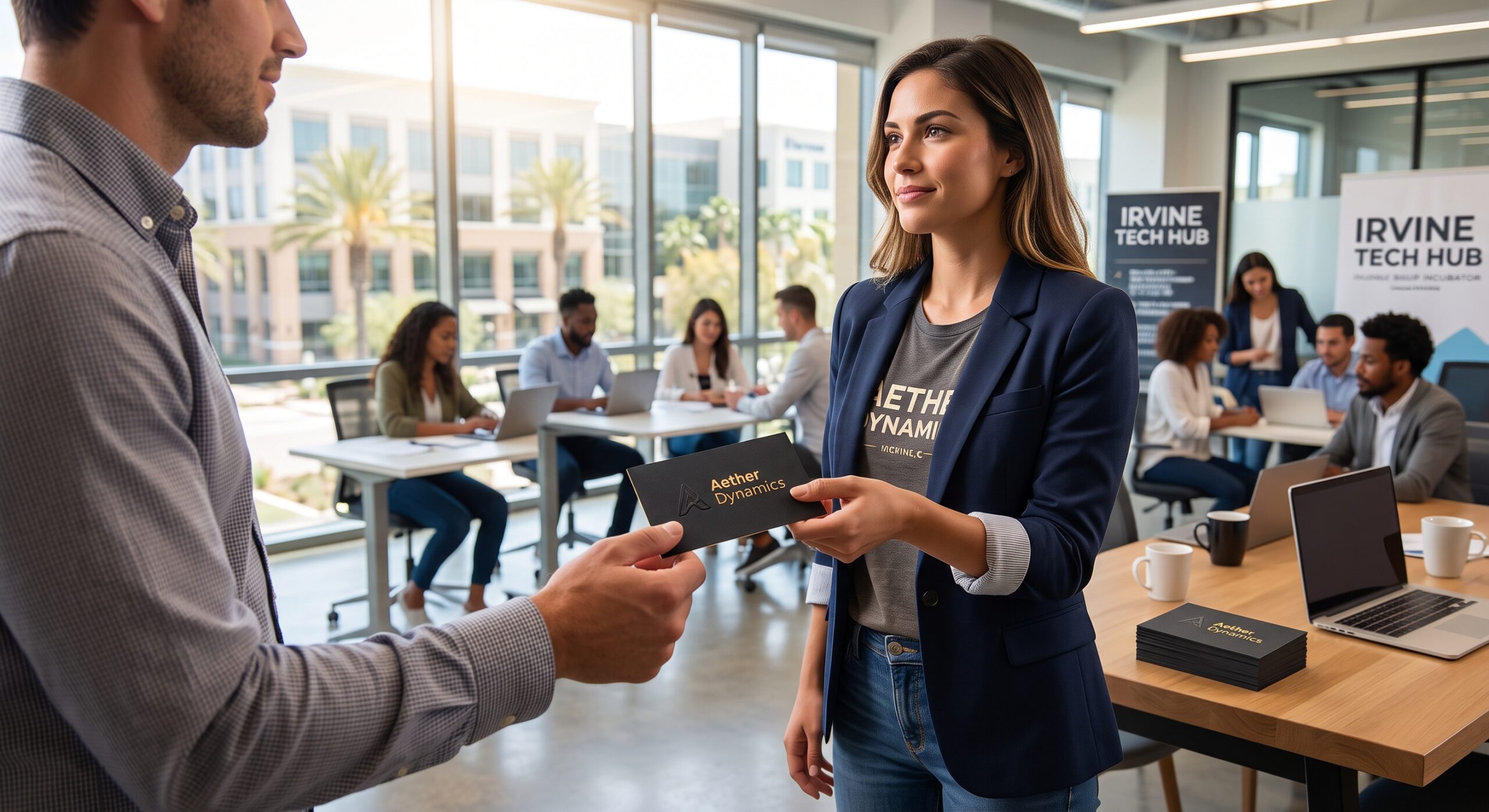
Premium business card printing gives an Orange County startup an immediate credibility advantage in Irvine because the card is often the first physical object a prospect holds. A thick, well-printed card signals that the company pays attention to detail before a single word of the pitch is heard. In a market where Irvine investors, B2B buyers, and co-working neighbors meet dozens of founders a month, a flimsy, smudged, or generic card quietly undercuts the story you’re telling. The practical answer: choose heavier stock, a finish that resists wear, and a print partner who can match color across every collateral piece you hand out.
Why Irvine Is a Harder Room Than It Looks
Irvine isn’t just another Southern California suburb with office parks. It’s a concentrated business environment where introductions happen constantly: UCI-affiliated events, the Spectrum corridor, the District, and the cluster of tech and life-science offices off Jamboree and Michelson. Founders here meet people who have already seen a thousand startups.
That density changes the math on first impressions. In a smaller market, a decent card is enough. In Irvine, a card competes against cards from companies with real budgets, established design teams, and procurement standards. Your card is being compared, often literally side by side on a table after a mixer.
The credibility gap startups face
A two-person startup and a 200-person competitor can look identical on paper. The difference shows up in physical details: card weight, print sharpness, whether the color matches your website, whether the edges are clean. Those details are cheap to fix and expensive to ignore.
What “Premium” Actually Means in Print Terms
Premium isn’t a marketing word in printing. It maps to specific, measurable choices. Here’s what separates a card that gets kept from one that gets tossed.
| Spec | Standard card | Premium card |
|---|---|---|
| Stock weight | 12–14 pt | 16–32 pt, often duplexed |
| Finish | Uncoated or basic gloss | Soft-touch matte, satin, or spot UV |
| Print method | Digital, short run | Offset for color accuracy at volume |
| Edge treatment | Standard cut | Painted edges, rounded corners |
| Feel | Flexible, light | Rigid, substantial |
You don’t need every upgrade. A 16 pt soft-touch matte card with a clean two-color design will outperform a busy 32 pt card with painted edges and six fonts. Weight and finish carry most of the perceived value; decoration only helps if the design is already restrained.
Stock weight and why it matters at the handshake
People register card thickness before they read it. A 16 pt card feels intentional. Below 14 pt, the card bends in a pocket, and a bent card reads as a company that hasn’t gotten its act together. If you’re handing cards to investors or enterprise buyers in Irvine, 16 pt is the floor, not the ceiling.
Finishes that survive real use
Soft-touch matte is the current default for tech and professional services because it photographs well and doesn’t show fingerprints. Spot UV — a raised gloss layer over specific elements like a logo — adds contrast without noise. Foil is effective when used sparingly on one element. Overuse of foil and embossing is the fastest way to make a startup look like it’s trying too hard.
Where Premium Printing Pays Off for Early-Stage Companies
Startups often assume cards are a rounding error and that everything should be digital. That’s a reasonable instinct that misses three specific moments where paper still wins.
- Investor and advisor meetings. A card left on the table after a pitch is a physical reminder of the conversation. It gets filed, not deleted.
- Trade shows and local events. At a crowded Irvine expo, the card that feels different gets a second look before it goes in the bag.
- Referral handoffs. When a contact passes your card to someone else, you’re not in the room to explain yourself. The card has to do it.
There’s also a cost angle worth understanding. Premium cards are not dramatically more expensive per unit at reasonable quantities. The gap between a basic 500-card run and a well-specified 500-card run is often a few cents per card. Spread across a year of meetings, that’s negligible against the value of one good introduction.
Design Choices That Read as Credible — and Ones That Don’t
Most credibility problems on business cards are design problems, not printing problems. A great printer can’t rescue a cluttered layout, and a mediocre printer will ruin a good one.
What works: one clear name, one clear role, one primary contact method, and a logo with room to breathe. What fails: QR codes that lead to a homepage, three phone numbers, taglines that explain the entire business model, and fonts under 8 pt.
Color consistency across your collateral
Your card, brochure, and banner should look like they came from the same company. That’s harder than it sounds, because digital printing, offset printing, and large-format printing handle color differently. If your card’s brand blue is noticeably different from your brochure’s brand blue, the inconsistency registers even if the viewer can’t name it.
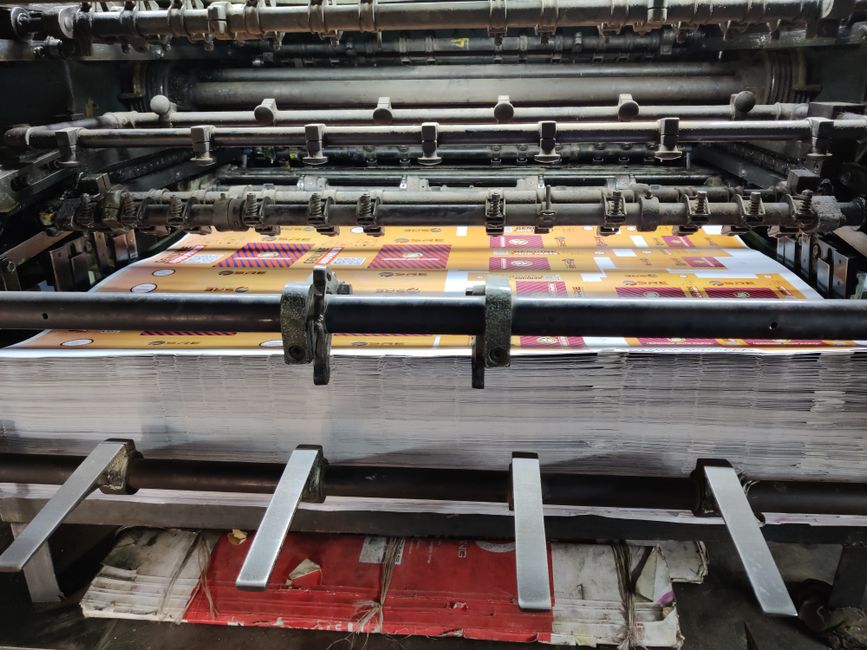
This is where working with one print partner for multiple pieces saves real headaches. A shop running both offset and digital in-house can manage color profiles so your Irvine trade show banner and your pocket folder match the card in someone’s hand. That kind of coordination is standard at a full-service operation like Main Graphics, and it’s much harder to achieve when you’re sourcing each piece from a different online vendor.
How to Order Premium Cards Without Wasting Money
Here’s a practical sequence that keeps quality high and cost predictable.
- Decide the one job the card has to do. A card for investors, a card for retail customers, and a card for recruiting are different cards. Pick one audience for your primary run.
- Set the spec before the design. Choose stock weight and finish first, then design to those constraints. Designing a delicate thin-line logo and then printing it on textured stock is a common and avoidable mistake.
- Proof on paper, not on screen. Ask for a physical proof or a sample of the exact stock and finish. Screens lie about both color and texture.
- Order in the right quantity. 500 to 1,000 is the sweet spot for most startups. Enough to last, few enough that you can revise after a rebrand or a title change.
- Keep the files. Ask for print-ready files with bleed, crop marks, and fonts outlined. You’ll need them again for the next run.
One more thing: check turnaround against your calendar. If you have a demo day or a conference in three weeks, that’s not the time to discover a two-week production queue. Local printing in Irvine shortens the loop on reprints and corrections.
Common Mistakes Orange County Startups Make
These come up repeatedly, and each one is fixable before you place an order.
- Printing 5,000 cards too early. Titles change, phone numbers change, and the design you loved in month two looks dated by month ten.
- Choosing the cheapest online option. The savings are real; so is the color drift, the thin stock, and the off-center cuts.
- Treating the card as a standalone item. It should be built alongside your brochure, folder, and signage so the brand holds together.
- Ignoring paper sustainability. Buyers notice recycled and FSC-certified stocks, especially in Irvine’s life-science and sustainability-adjacent sectors. Eco-friendly print is now a normal expectation, not a niche.
- No plan for the digital version. You still need a clean card image for email signatures, LinkedIn, and pitch decks. Shoot it once, on a neutral background, and reuse it.
What Premium Printing Costs and What Drives the Price
Pricing depends on four variables: quantity, stock, finish, and print method. Offset printing becomes more economical as quantity rises, which is why a 1,000-card run often costs only slightly more per unit than a 500-card run. Digital printing wins on small runs and fast turnarounds.
Finishes add cost in layers. Soft-touch matte is a modest upgrade. Spot UV adds a step. Foil stamping and painted edges add more, and they usually require a larger minimum quantity. If budget is tight, spend on stock weight and finish, and skip the edge treatments until you have a reason for them.
The honest guidance: get a quote with your actual specs rather than comparing headline prices from different vendors. A “cheap” card at 12 pt uncoated isn’t the same product as a 16 pt soft-touch card, and comparing them tells you nothing useful.
Frequently Asked Questions
How many business cards should a startup order?
Start with 500 to 1,000. It’s enough to cover a year of networking in Irvine without locking you into a design you’ll want to update after a funding round or a product pivot.
Is offset or digital printing better for business cards?
Digital is better for small quantities and fast turnaround. Offset is better for larger runs and for color accuracy that has to match other printed collateral. If you’re printing cards alongside brochures or folders, offset gives you tighter consistency across the set.
Does card quality really affect how people perceive a startup?
Yes, in a narrow but real way. People don’t judge your product by your card, but they do use physical details as a proxy for how carefully you operate. A card that feels substantial and looks consistent with your other materials removes a small doubt. That’s the whole point.
Getting Started in Irvine
Premium business card printing helps Orange County startups build instant credibility in Irvine because it converts an abstract claim — “we’re a serious company” — into something a person can hold. The mechanism is simple: heavier stock, a finish that holds up, color that matches your other materials, and a design that doesn’t try to say everything at once.
Before your next Irvine event, do three things. Pick the one audience your card is for, set your stock and finish, and get a physical proof before you commit to a full run. If you want the card, brochure, folder, and banner to look like they came from the same company, source them together from a printer who runs offset, digital, and large-format under one roof. That’s the difference between a card that gets kept and one that gets recycled.
Visit Main Graphics | Commercial Printer, Brochures, Banners, Business Cards, Poster Print Shop




Post Comment