The History and Evolution of Perms: From Retro Curls to Modern Waves in Guelph, ON
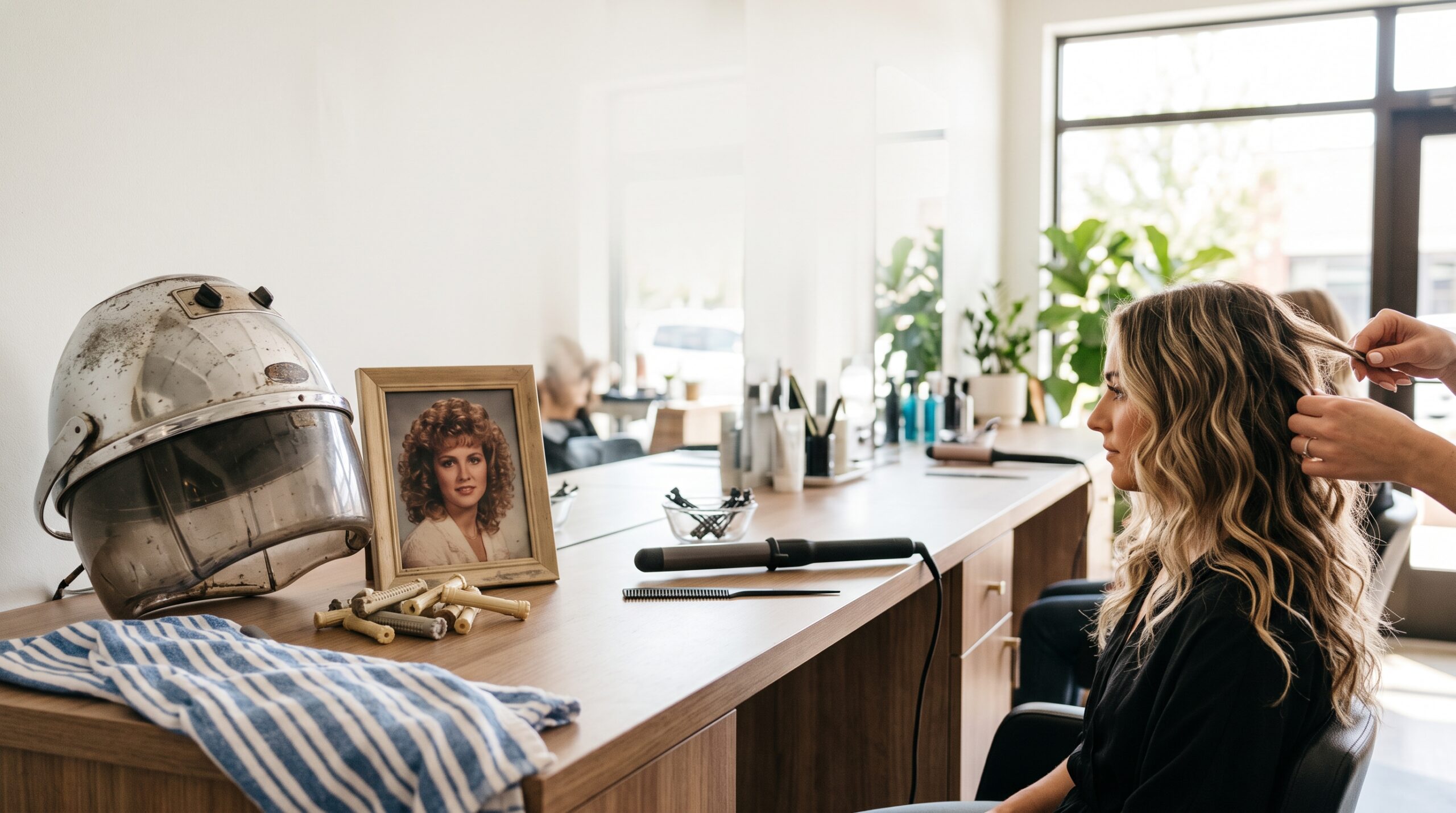
The perm has a longer and more complicated history than most people realize. It is not just the tight, crunchy curls of the 1980s. The modern perm is a precision chemical service that can create soft beach waves, voluminous roots, or defined ringlets depending on the rod size, wrap pattern, and solution used. If you are considering a perm in Guelph, ON, understanding how the service has changed will help you communicate exactly what you want to your stylist—and avoid walking out with a style that belongs in a decade you did not live through.
Where the Perm Actually Started: Not the 1980s
The concept of chemically altering hair structure dates back to ancient Egypt, but the modern perm as we know it emerged in the early 20th century. In 1906, a German hairdresser named Karl Nessler introduced the first heat-based perm machine. It was a heavy, intimidating apparatus with brass rods and electric heaters suspended from the ceiling. The process took hours and carried real risk of burns, but it produced curls that lasted for months.
By the 1930s, the “permanent wave” had become a mainstream salon service for women who wanted volume and curl without daily curling irons. The term “permanent” was always a bit of a misnomer—the curl lasts until the hair grows out or is cut off, but it is not truly permanent in the way a chemical relaxer is.
The Cold Wave Breakthrough
The real turning point came in 1938 when Arnold Willatt introduced the “cold wave.” This method used ammonium thioglycolate instead of heat to break and reform the hair’s disulfide bonds. It was safer, faster, and allowed for more consistent results. This chemistry is essentially the same foundation used in modern perms today, though the formulations have become much more sophisticated.
The 1980s: The Decade That Defined (and Haunted) the Perm
If you grew up in the 1980s, you likely remember the big, tight, voluminous curls that seemed to be on every head in North America. These perms used small rods, heavy tension, and aggressive neutralizers to create maximum curl. The results were dramatic, but they were also damaging. Many women spent the late 1980s and early 1990s growing out frizzy, over-processed hair.
This era created a lasting stigma. For years, the word “perm” conjured images of tight, unnatural curls and chemical burns. It is the main reason many people over 40 are hesitant to consider the service again, even though the technology has changed completely.
Why the 80s Perm Damaged Hair
The damage was not just from the chemicals. The technique itself was aggressive. Stylists used small rods, which create more tension on the hair fiber, and left the solution on for longer to ensure the curl “took.” The result was often over-processed hair that was brittle, dry, and prone to breakage. The modern approach is far more conservative, using larger rods and shorter processing times to preserve hair integrity.
The Modern Perm: What Changed in the 2000s and Beyond
Around the mid-2000s, the perm began to make a comeback, but it looked completely different. The “digital perm” from Japan and Korea introduced a new approach that used controlled heat and moisture to create softer, more natural-looking waves. This method, combined with improved pH-balanced solutions, allowed stylists to create body and movement without the tight, uniform curl of the past.
Today, the term “perm” covers a wide spectrum of services. You can request a “body wave” for subtle volume, a “spiral perm” for defined ringlets, or a “beach wave perm” for that effortless, tousled look. The choice of rod size is the single biggest factor in determining the final result. Larger rods produce looser waves; smaller rods produce tighter curls.
The Chemistry Is Gentler Now
Modern perming solutions use lower concentrations of thioglycolic acid and often include conditioning agents like keratin, silk proteins, and ceramides. This means the hair is less damaged during the process. A skilled stylist will also assess the hair’s porosity and elasticity before starting, which was rarely done in the 1980s. This pre-assessment is critical for avoiding over-processing, especially on color-treated or highlighted hair.
Who Is a Good Candidate for a Modern Perm?
The ideal candidate has hair that is in reasonably good condition. If your hair is heavily bleached, extremely damaged, or has been recently relaxed, a perm is likely not a safe option. The rule of thumb is that if your hair cannot stretch and return to its original length without breaking, it is not healthy enough for chemical restructuring.
Modern perms work best on hair that is virgin or has been colored with demi-permanent or permanent color that is in good shape. If you have highlights, your stylist will need to be extra careful, as the highlighted sections will process faster and may become more porous. It is always worth booking a consultation before committing to the service.
Perm vs. Other Curl Methods: A Practical Comparison
Many people wonder whether a perm is worth it compared to using a curling iron or heatless methods. Here is a quick comparison to help you decide:
| Method | Time Commitment | Damage Level | Longevity | Maintenance |
|---|---|---|---|---|
| Modern Perm | 2–3 hours in salon | Low to moderate (chemical) | 3–6 months | Low (air dry, scrunch) |
| Curling Iron | 10–20 minutes daily | High (heat damage over time) | Lasts until wash | High (daily styling) |
| Heatless Curls (rods, braids) | Overnight or 1–2 hours | None | Lasts until wash | Medium (planning required) |
| Chemical Relaxer + Curl | Varies | High | Varies | High |
If you want consistent waves without daily styling, a perm is the most practical option. If you only need curls for a special event, heat styling is the better choice.
What to Expect During a Modern Perm Appointment in Guelph, ON
A modern perm is not a quick service. You should plan for at least two and a half hours in the chair. The process involves several distinct steps:
- Consultation: Your stylist will examine your hair, discuss your desired curl pattern, and show you different rod sizes. Be specific about what you want—bring photos of the exact wave or curl you like.
- Shampoo and prep: Hair is washed with a clarifying or mild shampoo to remove product buildup. It is not conditioned before a perm, as conditioning can interfere with the chemical process.
- Rod placement: The stylist wraps your hair around rods. The pattern and tension determine the final look. This step takes the longest.
- Perm solution: The waving lotion is applied. The stylist will check the curl development periodically. This is not a “set it and forget it” step—timing is critical.
- Neutralizer: Once the desired curl is achieved, the neutralizer is applied to stop the chemical process and lock in the new shape.
- Final rinse and style: The rods are removed, hair is rinsed, and a deep conditioner is applied. Your stylist will show you how to style your new waves at home.
It is normal for the curl to look tighter immediately after the perm. It will relax and soften over the first week as the hair adjusts.
Aftercare: The First 48 Hours Matter Most
The first two days after a perm are the most important. You should not wash your hair, get it wet, or pull it back tightly. The hair’s bonds are still settling, and moisture or tension can disrupt the curl pattern. After 48 hours, you can resume normal washing, but you should avoid heat styling for at least a week.
Use a sulfate-free shampoo and a moisturizing conditioner. Permed hair is naturally more porous, so it needs extra hydration. A leave-in conditioner or curl cream will help define the waves and reduce frizz. Avoid brushing your hair when it is dry—use a wide-tooth comb in the shower or your fingers to style.
Cost Factors and How to Budget for a Perm
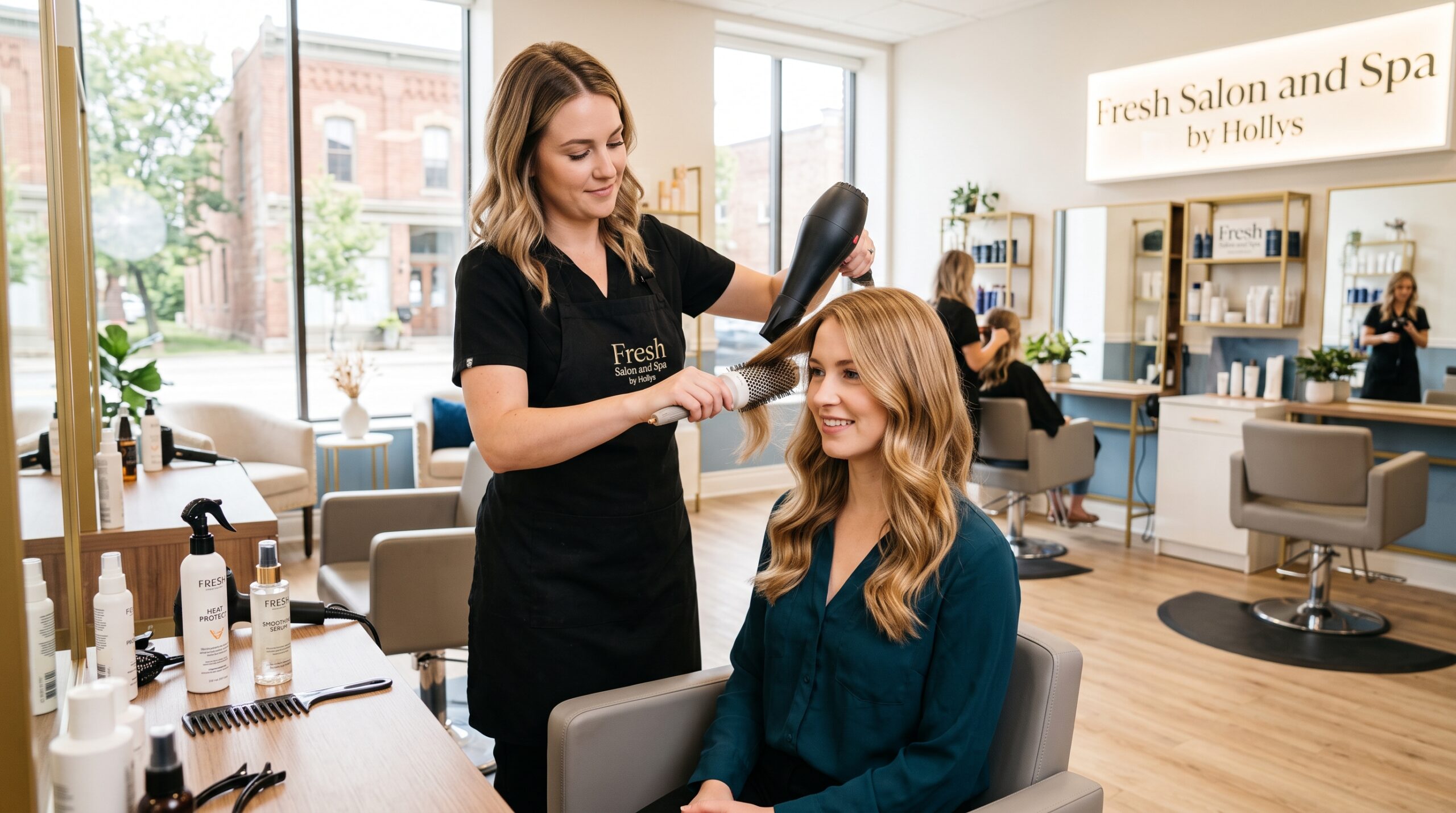
The price of a perm in Guelph, ON varies significantly based on the salon, the stylist’s experience, and the length and thickness of your hair. At Fresh Salon and Spa By Holly, pricing is based on a level system. The levels range from Entry to Level 4AA, reflecting the provider’s industry experience and client demand. A more experienced stylist will charge more, but the higher cost often translates to better consultation skills and more consistent results.
Expect to pay anywhere from $150 to $400 for a professional perm. This usually includes the consultation, the chemical service, and a finishing style. Some salons charge extra for deep conditioning treatments, so ask about the total cost upfront. It is also worth asking about touch-up pricing if you plan to maintain the perm as your hair grows out.
Common Mistakes People Make Before Getting a Perm
Even with modern technology, a perm can go wrong if the client does not prepare properly. Here are the most common mistakes to avoid:
- Getting a perm right after coloring: Wait at least two weeks after a color service before perming. The hair is still recovering from the chemical process.
- Using clarifying shampoo before your appointment: This strips the hair of natural oils, which can make it more vulnerable to chemical damage.
- Asking for a perm when you actually want a relaxer: These are opposite services. A perm adds curl; a relaxer removes it. Be clear about your goal.
- Choosing a rod size based on a photo without considering your hair length: Short hair will not produce the same wave pattern as long hair, even with the same rod size.
- Skipping the consultation: Do not book a perm without a consultation first. It is a chemical service, not a haircut. You need to discuss your hair history honestly.
Is a Modern Perm Right for You?
If you want to add volume, texture, or curl to your hair without daily heat styling, a modern perm is a legitimate option. It is no longer the damaging, crunchy process of the past. The key is finding a stylist who understands the chemistry and has experience with different rod sizes and wrap patterns.
Book a consultation before committing. Bring photos of what you want, but also be open to your stylist’s recommendations based on your hair type and condition. The best perm is one that looks like it could be natural—not a costume. With the right approach, you can get the waves you want and still have healthy, manageable hair.
Frequently Asked Questions
How long does a modern perm last?
Most perms last between three and six months. The curl will gradually relax as the hair grows and is exposed to washing and styling. The longevity depends on your hair type, the rod size used, and how well you maintain it.
Can you perm color-treated hair?
Yes, but it requires extra care. The stylist must assess the porosity of the colored sections and may use a milder solution or a shorter processing time. It is safer to wait at least two weeks after coloring before perming.
Can I style my permed hair with heat?
You can, but it is not recommended in the first week. After that, using a diffuser on low heat is fine. High heat can relax the curl and cause damage, so use heat styling sparingly and always with a heat protectant.



Post Comment